Greater noctule bat

Nyctalus lasiopterus (Schreber, 1780)
Vespertilionidae
Vulnerable
| Other names | |
|---|---|
| Catalan | Nòctul gegant |
| Spanish | Nóctulo grande |
| English | Greater noctule bat |
| French | Grande Noctule |
| Basque | Gau-saguzar handiaren |
| Galician | Nóctulo grande |
Description
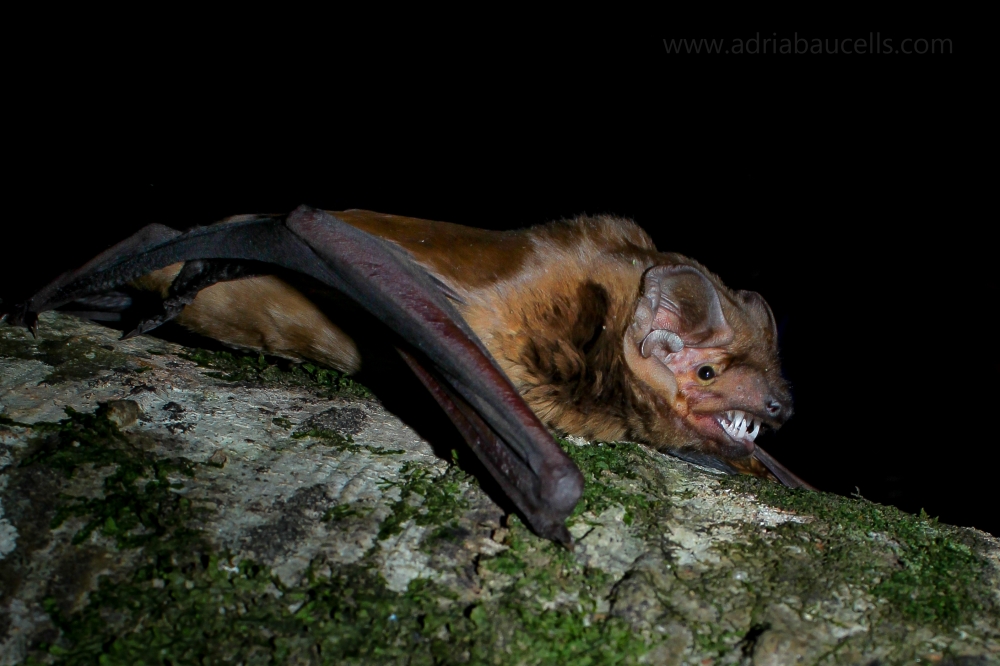
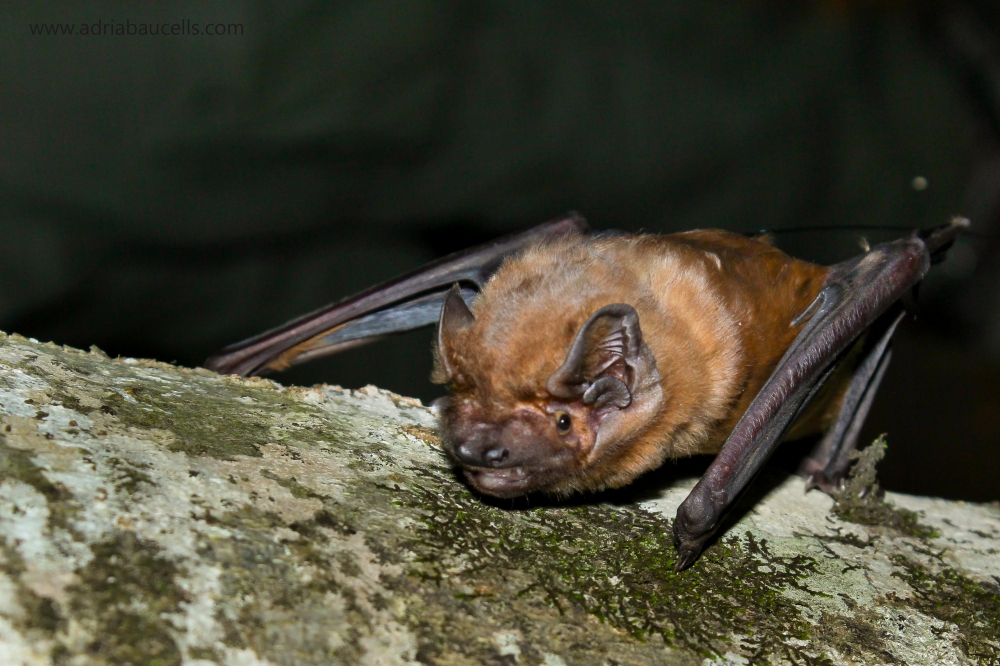
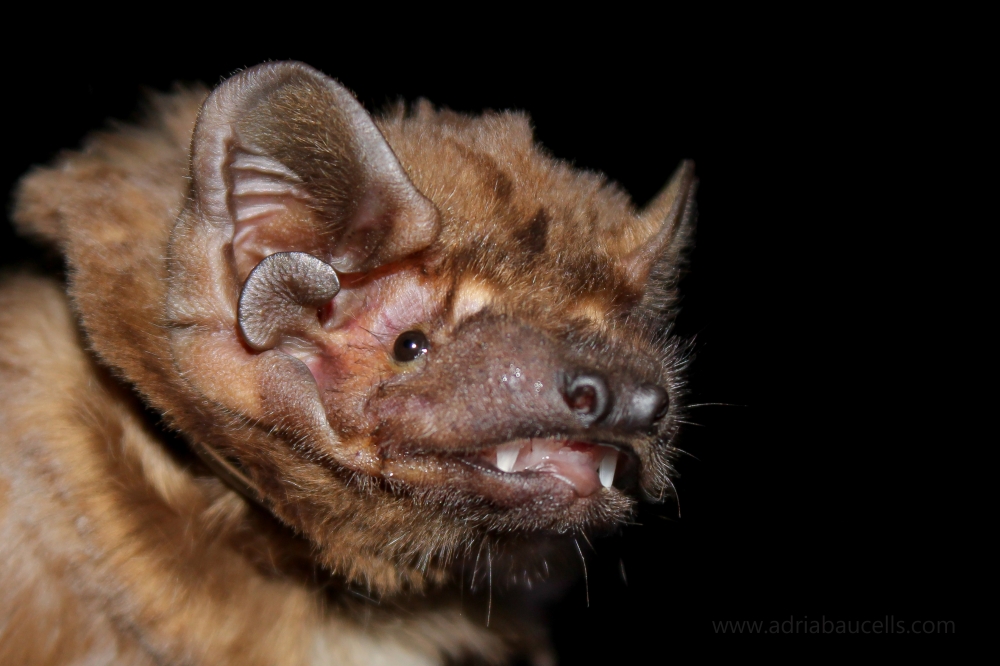
The largest bat in Europe, with a total head and body length ranging from 78 to 104 mm, a forearm of 60 to 70 mm, a wingspan of 410 to 460 mm, a tail of 55 to 66 mm, and a weight ranging from 35 to 60 g. It is very robust and large, with a broad muzzle, a large head, and relatively short (21 to 26 mm), rounded ears. Like other noctules, the tragus is short and wide, kidney or mushroom-shaped. The skin is dark brown, and the fur is dense, relatively long, and unicoloured, with the back being reddish-brown or dark brown and the belly only slightly lighter. Males can raise the hair behind the nape like a kind of mane. The wings are very long and narrow, and the inner wing is quite hairy between the body and the fifth digit and up to the elbow.
Unmistakable due to its size.
Fotografies
Trends
| General trend | Strong increase |
|---|---|
| Protocol | ChiroHabitats |
| Geographic scope | Catalonia |
| Number of localities studied | 95 |
| Annual change | 19.6 % |
| Method | TRIM |
| Analysis execution date | 01/09/2024 |
| General trend | Stable |
|---|---|
| Protocol | ChiroRivers |
| Geographic scope | Catalonia |
| Number of localities studied | 52 |
| Annual change | -0.2 % |
| Method | TRIM |
| Analysis execution date | 01/09/2024 |
| General trend | Moderate increase |
|---|---|
| Protocol | ChiroRoosts |
| Period | Hibernation |
| Geographic scope | Catalonia |
| Number of localities studied | 21 |
| Annual change | 8.4 % |
| Method | TRIM |
| Analysis execution date | 01/09/2024 |
| General trend | Moderate increase |
|---|---|
| Protocol | ChiroRoosts |
| Period | Migration |
| Geographic scope | Catalonia |
| Number of localities studied | 26 |
| Annual change | 10.8 % |
| Method | TRIM |
| Analysis execution date | 01/09/2024 |
| General trend | Stable |
|---|---|
| Protocol | ChiroRoosts |
| Period | Reproduction |
| Geographic scope | Catalonia |
| Number of localities studied | 12 |
| Annual change | 1.8 % |
| Method | TRIM |
| Analysis execution date | 01/09/2024 |